
Food is urban infrastructure too.
Cities plan for water, power, transport and data. Sacoma works with cities, universities, producers and technology partners to make sure food is designed in as well: low-carbon, traceable, healthy and fair to the people who grow it.
The smart city has a missing grid
Smart city plans usually cover energy, mobility, water and data. Food, which every resident needs every day, is rarely treated as infrastructure, even though it shapes public health, emissions and the livelihoods of farmers far beyond the city limits.
As cities grow, supply chains get longer and more fragile. Diet-related illness rises, producers lose value to middlemen and waste, and consumers can't see where their food came from or what it cost the planet. Sacoma's view is that the same tools cities already use, such as sensors, data platforms and AI, should be pointed at food too, and that they must serve people, not just efficiency.
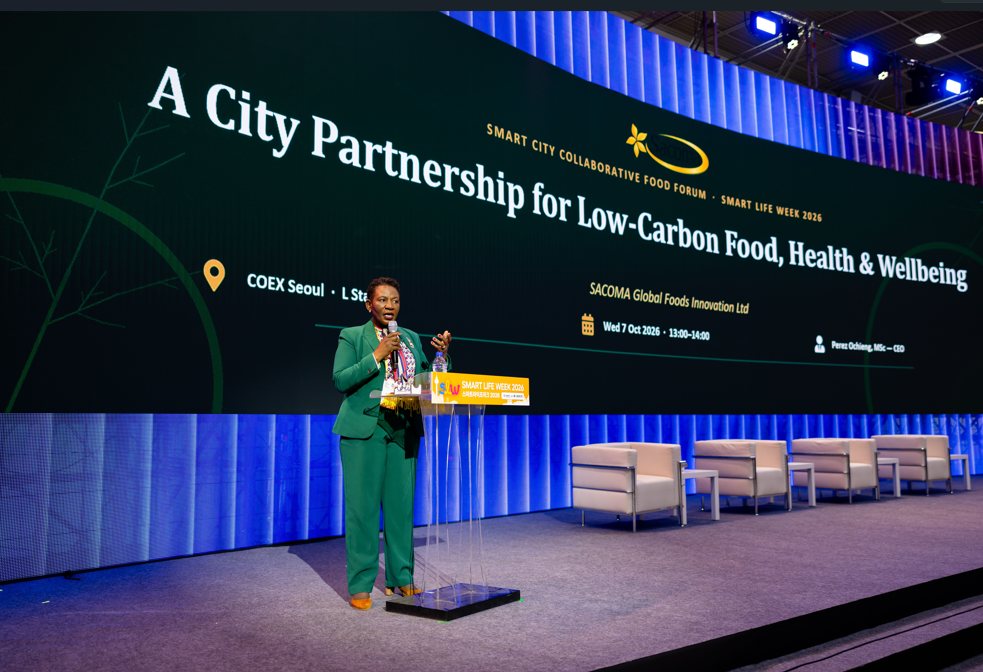
No matter how AI-centric society becomes, humanity must produce and consume food every day.Perez Ochieng, CEO, Sacoma, at Smart Life Week 2026
Four grids are routinely planned. The fifth, food, is usually left to the market.
Smart food, from farm to folk
We define smart food by three tests it must pass at the same time, and we organise our work around four pillars of a human-centred food system.
Good for you
Nutritious, safe and transparent, so residents can see what is in their food and choose well.
Good for the planet
Measured, lower-carbon and less wasteful, from the field through processing, transport and the kitchen.
Good for the producer
Fair value for the farmers and food makers who grow and make it, with shorter, fairer supply chains.
Urban–rural links
Digital platforms connecting city buyers directly with regional and overseas producers.
A stronger workforce
Technology that upskills farmers and supply-chain workers rather than replacing them.
Ethical data
Traceability that builds trust, with privacy and fair access for small producers.
Health and zero waste
Public food procurement for health, and surplus redirected to people, not landfill.
From a roadside in Kenya to the stage in Seoul
Our smart cities work grew out of years of connecting smallholder farmers with UK and international markets. Each step taught us something the next one needed.
Farm to shelf, the hard way
Buying sweet potatoes from roadside farmers in Kenya showed us that only part of a shipment was export-ready. With the Natural Resources Institute we built post-harvest storage and farmer training until produce met GlobalG.A.P. standards, then turned it into retail products with university students.
Read the Sweet Potato Initiative →Recognised for social responsibility
The sweet potato programme won Best Social Responsibility Initiative at the World Food Innovation Awards, proving that a farm-to-shelf model could work end to end.
Our story →Proof of concept in Seoul
Through the Seoul–London Exchange and three years of work with Gangnam-gu and the Seoul AI Foundation, Sacoma tested a human-centred model that shortens supply chains and connects urban consumers directly with peri-urban farmers.
About the Forum →Exhibiting at Smart Life Week
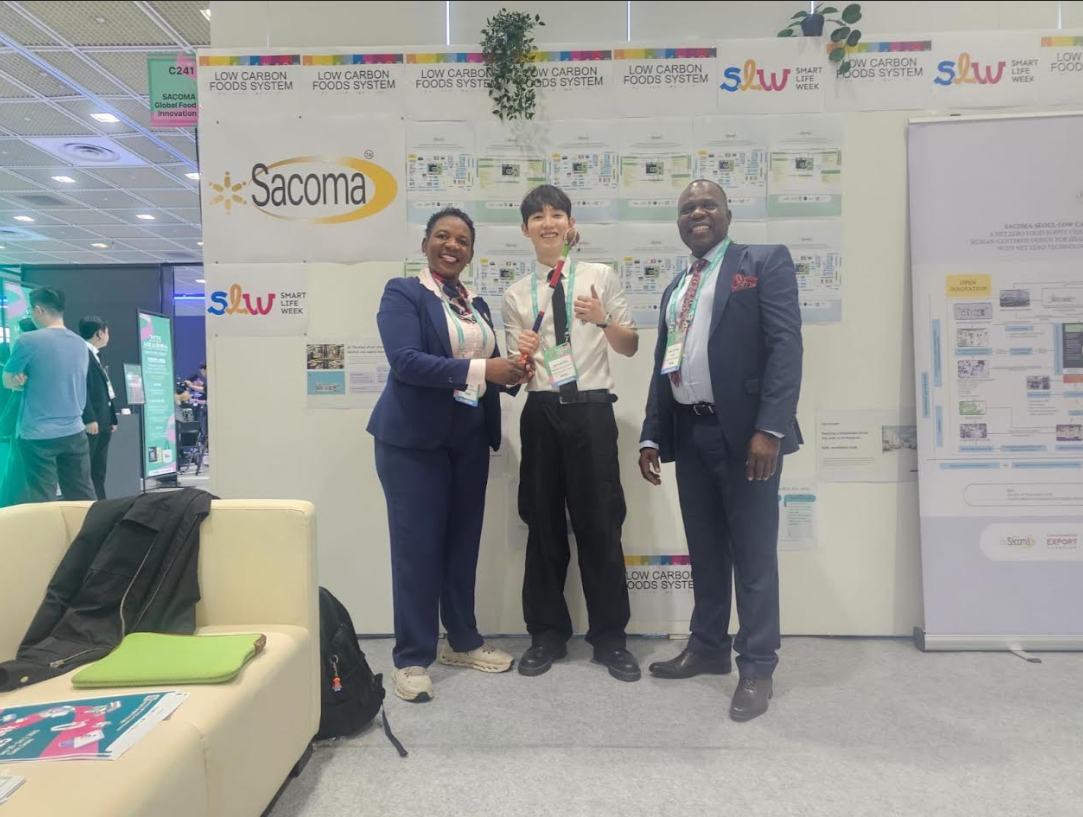
Sacoma showed its Low Carbon Foods System at Smart Life Week 2025 in Seoul, alongside cities and companies from around the world.
Why food is the missing piece →Convening the first Smart City Food Industry Collaborative Forum
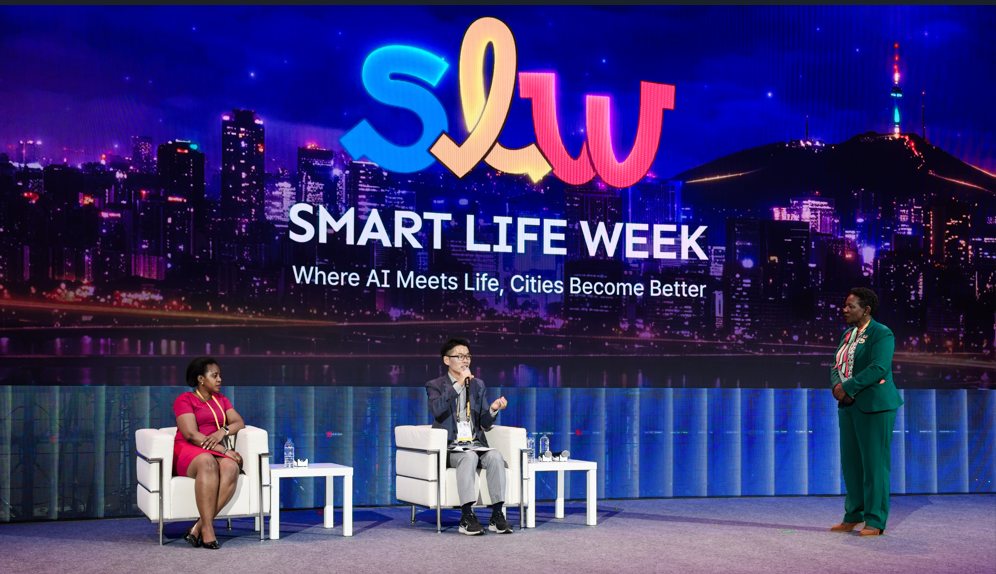
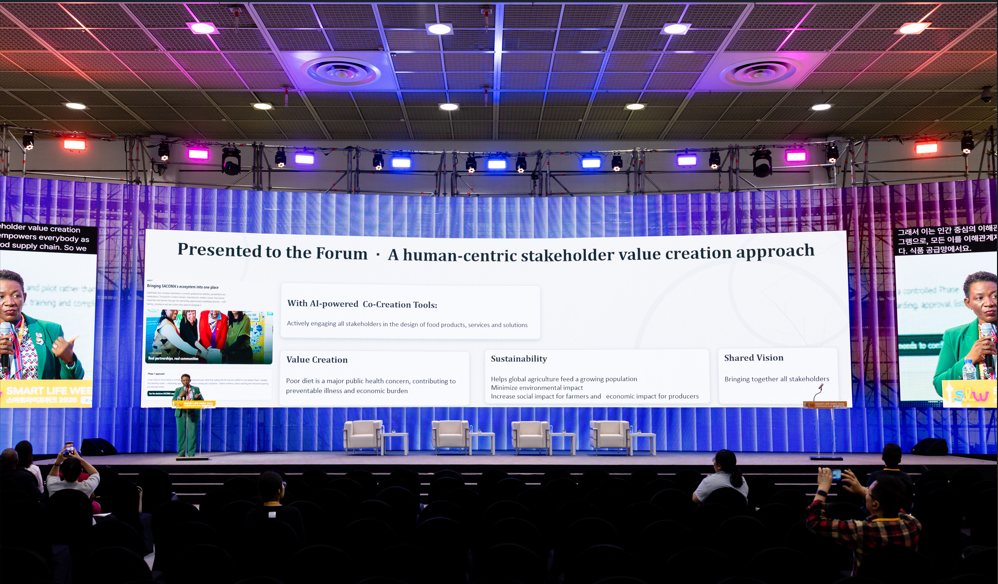
At Smart Life Week 2026, which brought together 110 cities from 52 countries [5], Sacoma convened city, university, embassy and industry voices from Korea, Kenya, the Czech Republic, Taiwan, Vietnam and the UK. We presented an AI-powered food traceability system linking producers, consumers and technology companies, and the event was covered in the Korean press by The Fourth Journal.
Read the full recap →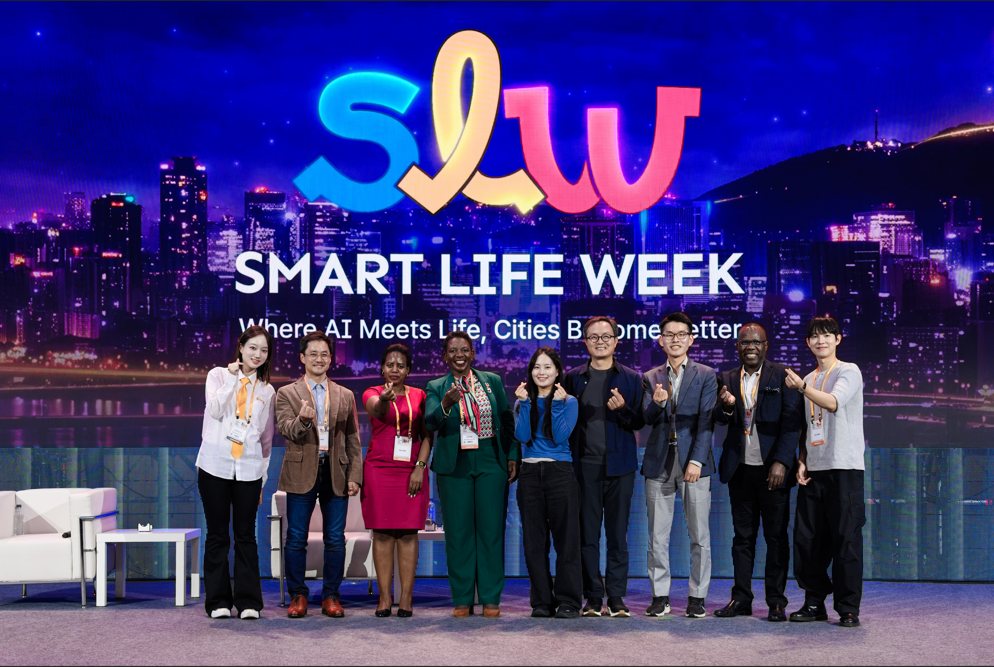
Four workstreams, one food system
The initiative brings our programmes together so a city partner gets one joined-up offer rather than separate projects.
AI food traceability platform
- One platform linking producers, consumers and technology companies.
- Lets people check a food's nutrition, its environmental impact and whether its producers were paid fairly.
- Builds on the Seoul proof of concept and a digital-twin view of the supply chain.
Low-carbon supply chains and the Carbon Bank
- Measure footprints using recognised standards (GHG Protocol, ISO 14067, GLEC).
- Reduce first, then balance what remains through a Carbon Bank of verified savings and credits.
- A carbon footprint certificate with purchases, with honest, verifiable claims.
Producer inclusion and skills
- Training farmers and food makers to meet UK and international standards.
- Helping products reach retail, from compliance to test-selling in our shops.
- Making sure small producers take part in the data system rather than being left outside it.
City partnerships and the Forum
- Convening cities, universities, embassies and businesses around food at Smart Life Week.
- Links with Seoul and Gangnam-gu, and with Kenya's smart-city and diplomatic community.
- Trade missions that open markets for producers in our network.
Who benefits, not just which technology
A model set out at the 2026 Forum by Prof. Dagmar Cagáňová of NEWTON University: each partner plays a clear role, and every project answers four questions from day one.
Universities
Research, talent and evidence
Companies
Solutions, commercialisation and market access
Cities
Policy, regulation and real-world settings
Citizens
Service experience and trust
Honest about where we are, clear about where we're going
We have proved the idea and built the relationships. The next stage is turning pilots into working systems that cities can adopt.
| Area | Where we are today | Where we need it to be |
|---|---|---|
| Traceability | Proof of concept completed in Seoul; platform design presented in 2026. | A live pilot in a partner city, linking named producers to urban buyers, with data residents can check. |
| Carbon | Measurement method and Carbon Bank designed; certificate tool built with example data. | Real product footprints, independently verified, with certificates issued on every eligible order. Working towards net zero. |
| Producers | Farmer training, export-readiness and retail-readiness programmes running. | Smallholders taking part in the data system as active agents, including those without smartphones. |
| Cities | Relationships in Seoul and Gangnam-gu, Kenya and a growing international network. | Formal city partnerships with clear roles, and the Forum as a yearly meeting point that moves between partner cities. |
| Evidence | Case studies and published articles. | Shared impact data on health, emissions and producer income, reviewed with university partners. |
Goals in the right-hand column are our direction of travel, not commitments with fixed dates. We will publish progress as each milestone is reached.
What we need to get there
No single organisation can redesign a city's food system. These are the partners that would move the initiative forward fastest.
Pilot cities and districts
A city or district willing to host a traceability and low-carbon food pilot with clear roles and shared data.
Research partners
Universities to provide independent evidence on health, emissions and producer income.
Technology partners
Specialists in AI, IoT, data platforms and inclusive tools such as SMS for farmers.
Producers and cooperatives
Farmer groups and food makers ready to trace, measure and improve, and reach new markets.
Buyers and procurers
Retailers, food service, schools and hospitals who want traceable, lower-carbon supply.
Funders and investors
Partners who can back pilots and help scale what works across more cities.
Read, watch and take part
Smart City Food Forum
Programme, pillars and speakers from Smart Life Week 2026 in Seoul.
Visit page → ArticleFrom farm to table with AI
What happened at the 2026 Forum: traceability, partnerships and the Kenya case.
Read → ArticleWhy food is the missing piece
Why smart cities need smart food systems, and what a human-centred approach looks like.
Read → In the pressThe Fourth Journal (Korea)
Korean coverage of Sacoma's Forum presentations and panel.
Read on 4th.kr ↗ InitiativesLow Carbon Food and more
Our initiatives, from low-carbon food to clay pot cooking.
Explore → Case studySweet Potato Initiative
The award-winning farm-to-shelf project where our approach began.
Read → ProgrammeRetail Launch Pad
Taking producers from product to shelf, with compliance and test-selling.
Learn more → ProgrammeSacoma Food School
Courses for food entrepreneurs, exporters and producers entering the UK.
Learn more → GalleryPhotos and videos
Moments from events, trade missions and our work with producers.
View →
Video: Perez Ochieng on taking Sacoma to Seoul. More on our YouTube channel.
Help us put food on the smart city map
Whether you run a city programme, a farm cooperative, a university lab or a food business, there is a role for you in building a healthier, lower-carbon and fairer food system.
- Ellen MacArthur Foundation, Cities and a circular economy for food
- Crippa et al. (2021), Nature Food: food systems and global emissions
- Africanews (2023), SokoFresh cold storage in Kenya
- Sacoma, Smart City Food Industry Collaborative Forum recap (2026)
- The Korea Times (13 Oct 2026), Smart Life Week draws record crowds