
From farm to table with AI: smart cities must design even the food supply chain
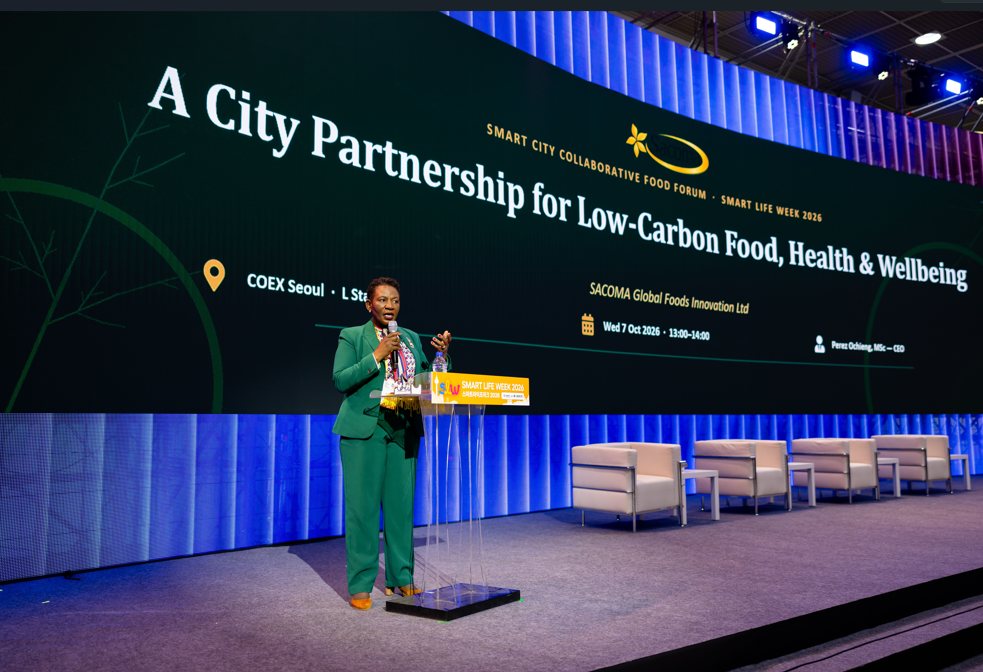
Food is urban infrastructure too. At COEX in Seoul, SACOMA convened city, university, embassy and industry voices around a low-carbon, human-centred food system.
Perez Ochieng, CEO of SACOMA, presented a low-carbon, human-centred supply chain solution that brings food into the realm of urban infrastructure. The plan builds a collaborative ecosystem that uses data to link the entire process, from production to distribution and consumption.
It draws on three years of collaboration and Proof of Concept (PoC) work with Gangnam-gu and the Seoul AI Foundation. On that basis, SACOMA proposed, and is now building, an AI-powered food traceability system that connects producers, consumers and technology companies on a single platform.
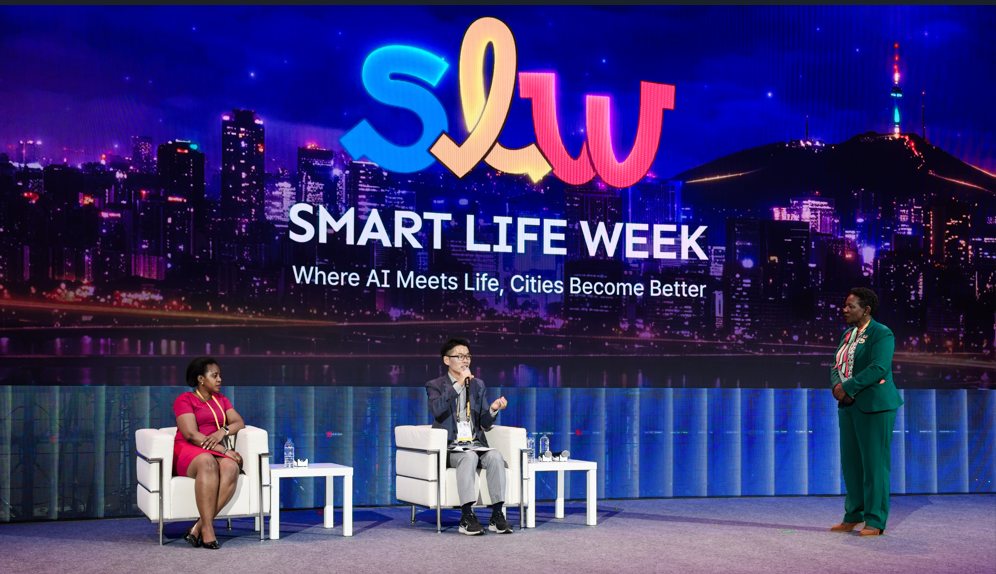
With a sense of great achievement after a resilient journey, the inaugural Smart City Food Industry Collaborative Forum was held at Seoul Smart Life Week (SLW2026), at COEX in Gangnam-gu, Seoul, on 7 October 2026.
The purpose is to let consumers transparently check not only the nutritional profile of their food, but also its environmental impact and whether its producers are fairly paid.
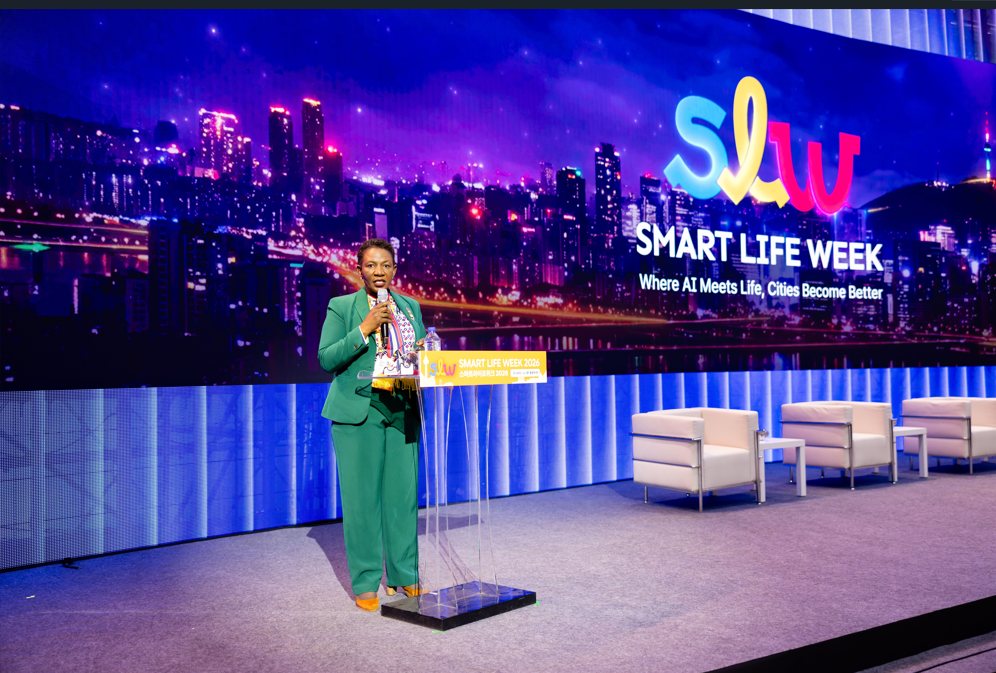
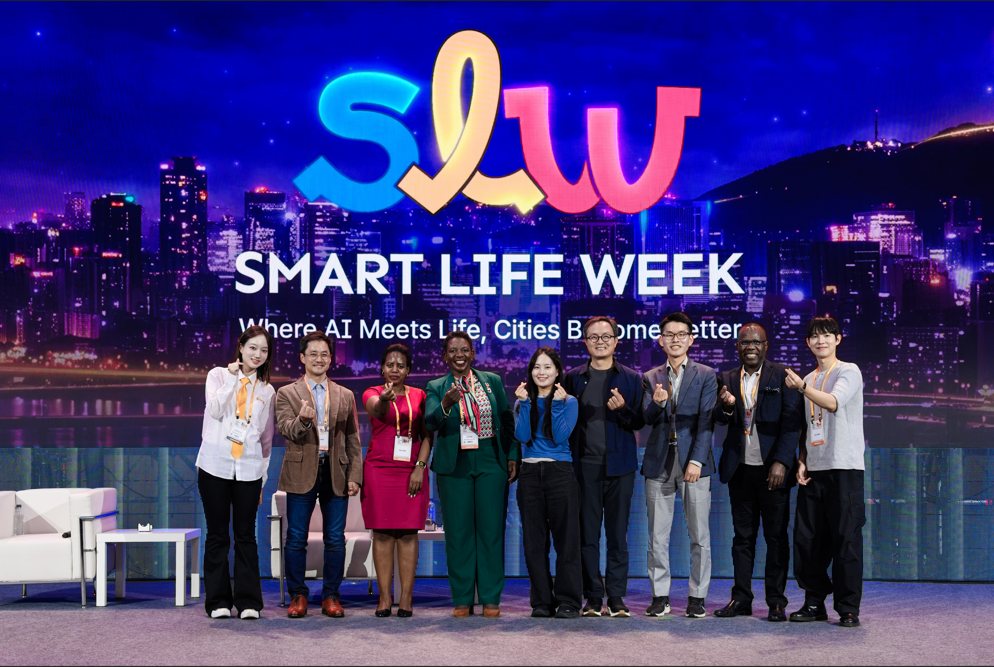
The SACOMA-led forum stood out because it did not treat food as a simple primary industry or distribution sector. It treated food as a complex issue where urban health, the environment and data infrastructure meet.
The case for food in smart citiesTracking production, distribution and consumption, with farmers, businesses and consumers taking part
The forum set out a supply chain management direction that goes beyond using AI for efficiency. It asks, together, about producers’ income and sustainability, consumer health and environmental impact.
No matter how AI-centric society becomes, humanity must produce and consume food every day.
Perez Ochieng, CEO, SACOMA
Given those numbers, I emphasised that food should not be left out of discussions on smart cities.
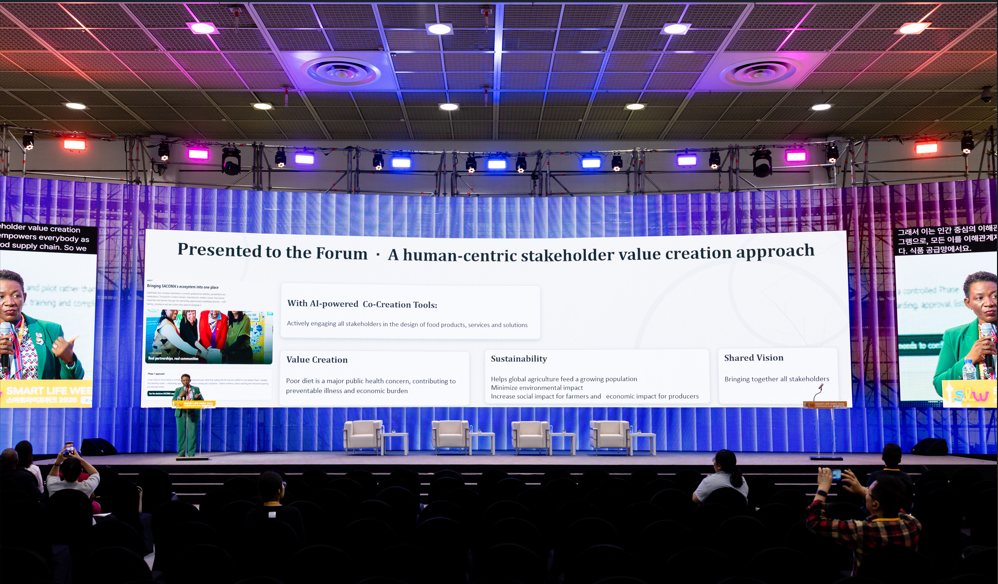
“From farm to table with AI… Smart cities must design even the food supply chain.”
It is not every day that a local Seoul publication covers a topic straight after an international guest lecture. I was especially pleased that, following Seoul Smart Life Week 2026, the Korean Fourth Journal published an article on the presentations and panel discussion. The headline says it beautifully.
Read the article on 4th.kr ↗
Hosted and organised by SACOMA Global Foods Innovation as part of the Seoul Smart Life Week programme, the event brought together domestic and international experts to explore how to build a people-centred, low-carbon food supply chain.
Those who cannot enter the data system may be excluded.
Perez Ochieng, CEO, SACOMA
In a high-tech society, farmers and small-scale producers must not be marginalised. They should take part as active agents in the data system, supported by data-driven AgriTech.
Global warming and urbanisation have made food supply chains vulnerable. I argued that AI and data technologies should be redefined as key means of protecting urban health, the environment and farmers’ livelihoods, not just as tools for efficiency.
As organiser and convener of the Smart City Food Forum, SACOMA will continue working with the city, businesses, universities and producers on low-carbon food supply chains and on their health and environmental impacts.
Partnership strategy“Who benefits, not the technology itself”
Dagmar, Vice Rector of Newton University in the Czech Republic, emphasised that a human-centred smart city must rest on a partnership strategy with a clear division of roles, rather than on simply introducing technology. She proposed this structure:
She argued that four questions must be asked from the earliest stages of any venture:
- Who benefits? Users and producers.
- What value is created? Jobs, health and sustainability.
- What evidence and data are used?
- How will it scale?
For a partnership to succeed, she said, five building blocks must be in place:
- A shared sense of the problem
- Complementary roles
- Collaborative learning
- Verifiable trust and relationships
- A scale-up path designed early
AI, in this model, works as an assistant that gathers and interprets signals from cities, businesses and citizens to support fair decisions. When the model works in a food system that involves every stakeholder, it can help solve other urban problems as well.
Field case · KenyaDigitising agricultural production and exports with IoT and AI
Gillian Kerubo, Secretary at the Embassy of the Republic of Kenya in Korea, said Kenya is pursuing a national AI strategy and a digital agriculture information bill to overcome the loss of up to 30% of its harvest caused by a lack of cold chain.
- Cultivation and export information sent by SMS to small-scale farmers without smartphones, bridging the digital divide.
- Crop management based on satellite imagery, and IoT sensors that control greenhouse environments.
- Blockchain and QR codes that link farms to global markets and help meet the EU’s strict environmental regulations.
Food and healthLinking what we eat directly to citizens’ health
Kim Won-il, CEO of Tomorrow’s Table, introduced an education programme built on traditional fermented foods. With Dr. Oscar from the medical and public health field, he stressed that the first step in preventing chronic disease is choosing safe, sustainable food.
Dr. Oscar highlighted the need for a system that reduces chemicals and transparently tracks food along the whole supply chain, from farmer to consumer.
Food is medicine.
Dr. Oscar, medical and public health
It is directly linked to citizens’ health.