
Affordable Baby Formula Through Smarter Innovation
Formula prices have become one of the hardest costs for families to absorb. Here is how regulators, retailers and manufacturers are responding, and what it means for parents right now.

Key takeaways
- Every first infant formula sold in the UK must meet the same legal nutrition standards. A higher price does not mean better nutrition.
- The UK competition regulator (CMA) found weak price competition and estimated parents could save around £300 a year by switching from a mid-priced brand to a cheaper one.
- The UK and devolved governments responded in December 2025, accepting six of the CMA's eleven recommendations in principle, including letting parents use loyalty points, vouchers and gift cards on formula.
- Some manufacturers are cutting cost from packaging and logistics rather than from the recipe.
A necessity, not a choice
For many families, formula is not optional. When a baby is not breastfed, or is only partly breastfed, formula is their main source of nutrition for the first year. Over the past few years its price has climbed sharply, adding pressure to household budgets already stretched by the wider cost of living.
Formula is also an unusual product to shop for. Once a baby has settled on a feed, many parents are reluctant to change it. The strict marketing rules that protect breastfeeding mean there are no price promotions on infant formula, which also makes it harder for parents to see which options cost less.1
The CMA found that the choice of brand is often made in hospital, straight after birth, without clear or impartial information. Many parents do not know that every first infant formula sold in the UK meets the same compositional rules, so premium branding and packaging can lead people to assume a higher price means better nutrition.1
Price is not a measure of nutrition. Every first infant formula on a UK shelf has to meet the same standards.
How the sector is changing
Affordability has moved from a side issue to a core question for the whole sector. Change is coming from three directions.
Regulators
The CMA called for impartial information on nutritional equivalence, clearer in-store price comparison, and the use of loyalty points, vouchers and gift cards on formula. Governments have agreed to issue guidance on payment methods.2
Retailers
Supermarkets have cut prices on branded and own-label formula. Own-label products are getting renewed attention as a nutritionally equivalent option, because they meet the same rules.
Manufacturers
Some producers are questioning long-held assumptions about packaging, logistics and cost, and redesigning products to remove cost that does nothing for nutrition.
- Feb 2024CMA opens its market studyConcerns about prices, competition and the information parents receive.
- 14 Feb 2025Final report publishedEleven recommendations to the four UK governments, grouped into four areas.1
- Dec 2025Four-nation government responseSix recommendations accepted in principle. Further work needed on others, including extending advertising restrictions to follow-on formula.2,3
- NextGuidance and further reformHealth and food-poverty groups say these steps alone will leave prices largely unchanged and are pressing for more.4
Rethinking the pack, not the recipe
One example of this shift is Bonya, a newer formula brand from Kendal Nutricare, the family company behind Kendamil. Its approach is to change how formula is packed and delivered rather than cutting back on what goes into it.
Instead of a rigid metal tin, Bonya comes in a card box holding two sealed 400 g bags.5 The aim is to take material, manufacturing complexity and transport cost out of the product. The recipe is still made to the same UK rules, with natural milk fats, no palm oil and plant-based DHA, and the brand says it donates one box for every ten sold to support families in need.6
It challenges an old industry assumption: that a heavy tin and premium branding are needed to signal quality and trust.
| Traditional | Box format | |
|---|---|---|
| Outer pack | Rigid metal tin, lid | Card box |
| Inside | Loose powder | Two sealed 400 g bags |
| Aims to cut | n/a | Material, production steps, transport |
| Nutrition rules | Same UK standards | Same UK standards |
Illustration only. Always follow the preparation and storage instructions on the pack.
What this means for you
The focus on affordability is slowly changing how formula is bought. Lower-cost options meet the same nutrition standards as higher-priced ones, and comparing prices should get easier. These are the practical points worth knowing today.
✓Ways to save safely
- A cheaper first infant formula meets the same legal standards as a premium one. Ask your health visitor if you are thinking of switching.
- If you are eligible for Healthy Start, the card can be used on infant formula. We accept Healthy Start in our Dagenham shop.
- Loyalty points, vouchers and gift cards should increasingly be accepted for formula, following the government's response.2
- Compare by price per 100 g, not per pack.
!Never do this
- Never water formula down or add extra water to make it last longer. It can make a baby seriously ill.
- Do not use homemade formula or cow's milk as a main drink before 12 months.
- Follow-on formula is not needed. NHS guidance says first infant formula can be used for the whole first year.7
- If you are struggling to afford formula, speak to your health visitor, GP or local food bank. Help is available.
Kendamil toddler milks: three options
For children aged 12 months and over, these are the three Kendamil toddler milks we stock. Prices and availability below are live from our shop.
Good to know: the NHS says toddler and growing-up milks are not necessary. From 12 months, most children can drink whole cow's milk as part of a varied diet.7 Toddler milks are an option, not a requirement.
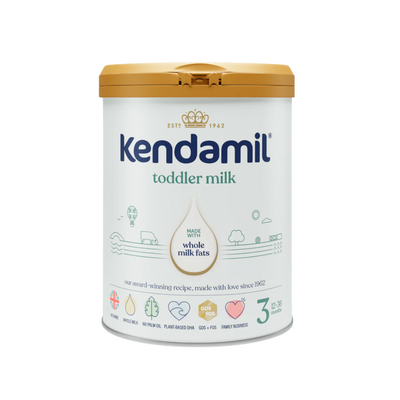
Kendamil Classic Toddler Milk
- Age
- 12 months+
- Recipe
- Classic dairy recipe
- Pack
- Single tin
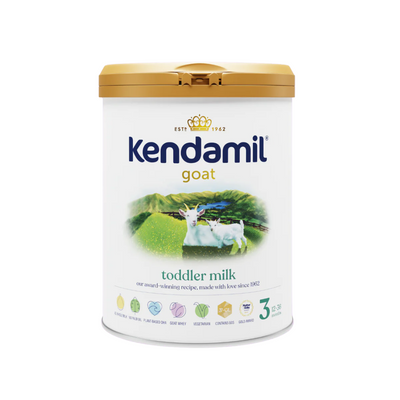
Kendamil Goat Toddler Milk
- Age
- 12 months+
- Recipe
- Made with goat milk
- Pack
- Single tin
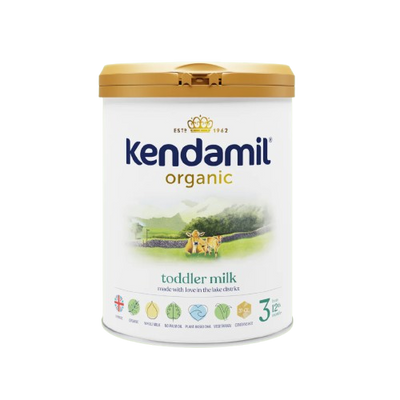
Kendamil Organic Toddler Milk
- Age
- 12 months+
- Recipe
- Organic whole milk, plant-based DHA and 3’-GL
- Pack
- Single tin
Accessible, not aspirational
Affordable formula should not depend on short-term discounts or crisis measures. Lasting progress needs continued regulatory reform, clear and impartial information for parents, and more manufacturers willing to design out cost that adds nothing to nutrition.
Packaging innovations show that affordability and quality can go together. It requires the industry to rethink where value really lies. If more producers follow, parents will benefit from a market built on access, trust and fairness as well as nutrition.
As always, speak to a healthcare professional before making feeding decisions, so you know the choice is right for your baby.
M.S.A
Visit our Dagenham shop
Healthy Start cards accepted in store, alongside healthy foods for the whole family. Questions about what we stock? Our team is happy to help.
Sources
- Competition and Markets Authority, Infant formula and follow-on formula market study, final report 14 Feb 2025; summary of findings and £300 estimate via Bird & Bird.
- UK, Scottish and Welsh governments and FSA, Infant formula: government response to CMA market study, Dec 2025.
- UNICEF UK Baby Friendly Initiative, statement on the December 2025 government response.
- The Food Foundation, A missed opportunity to curb high infant formula prices?
- Boots, Bonya product listing (800 g, 2 x 400 g).
- Trolley.co.uk, Bonya product information (donation pledge).
- NHS, Types of formula.